
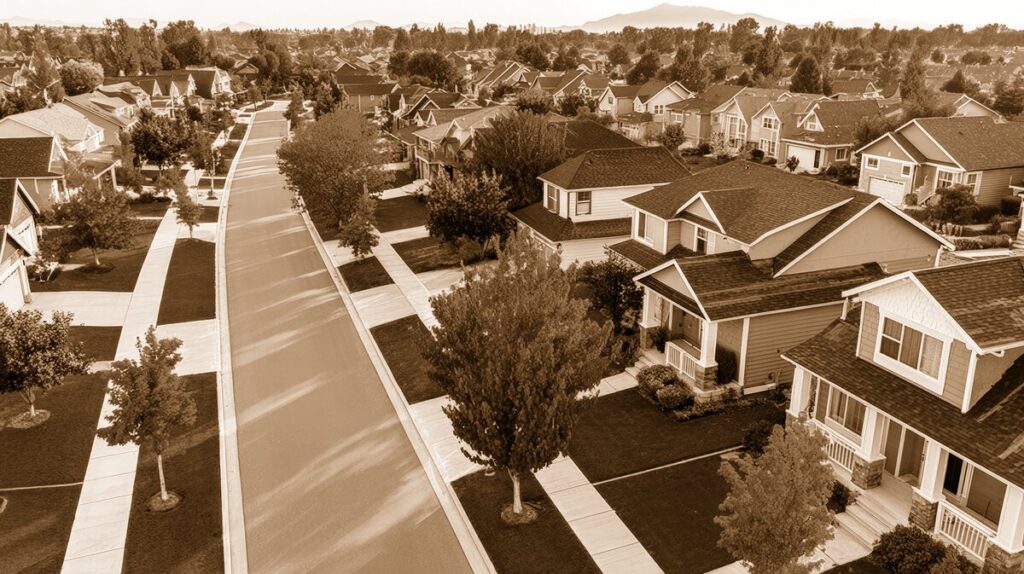
A Quiet Corner of The Woodlands
Tucked behind the gates of Carlton Woods, Philbrook is one of those small, distinctive enclaves that can be easy to overlook on a map but memorable once you have driven through it. Centered around Philbrook Way in the Village of Carlton Woods, the neighborhood reflects a later chapter in the broader story of The Woodlands: a community that began as a bold experiment in forest-centered planning and gradually grew into a collection of highly individual residential villages and neighborhoods.
Philbrook is not an old Texas settlement in the traditional sense, nor does it predate The Woodlands. Its heritage is tied to the community’s modern development history, especially the expansion of Carlton Woods in the early 2000s. The first homes along Philbrook Way were built during that period, with county and real-estate records showing residences dating from approximately 2004 through the late 2000s. ([redfin.com](https://www.redfin.com/TX/Spring/15-Philbrook-Way-77382/home/33287396?utm_source=openai))
What makes the area special is the way it combines newer construction with the older ideals that shaped The Woodlands from the beginning: respect for trees, careful land planning, quiet streets, generous green space, and a strong relationship between homes and the natural setting.
From Timberland to Master-Planned Community
Before Philbrook existed, the land around it was part of the large, wooded tract assembled by George Mitchell and his development partners. In 1964, Mitchell purchased approximately 2,800 acres associated with the Grogan-Cochran Lumber Company. Over the following decade, additional property was acquired, eventually creating the foundation for what would become The Woodlands. ([thewoodlands.com](https://www.thewoodlands.com/community/history/?utm_source=openai))
The Woodlands officially opened on October 19, 1974, beginning with the Village of Grogan’s Mill. The vision was unusual for its time. Rather than separating homes, offices, schools, shopping, and recreation into distant zones, planners envisioned villages where daily needs could be reached within a short drive or walk. Tree preservation, winding roads, parks, and trails were central to the plan.
That original philosophy eventually guided the creation of Carlton Woods and its residential sections. By the time Philbrook Way was developed, The Woodlands had already established its identity as a place where luxury homes could coexist with forests, golf courses, lakes, and greenbelts.
How Philbrook Got Its Name
The exact origin of the name *Philbrook* is not widely documented in publicly available histories of The Woodlands. It appears to have been selected as a neighborhood or street name during the planning of Carlton Woods rather than inherited from a historic farm, village, or early Montgomery County settlement.
That is not unusual in The Woodlands. Streets and neighborhoods throughout the community were given names connected to native plants, wildlife, literature, geography, music, history, and carefully developed themes. The community’s naming tradition was shaped by planners and marketing staff who worked to give each village and neighborhood its own character. ([houstoniamag.com](https://www.houstoniamag.com/news-and-city-life/2017/10/street-names-the-woodlands?utm_source=openai))
In Philbrook’s case, the name has a traditional, almost New England sound. “Brook” suggests a small stream or wooded watercourse, while “Phil” may reflect a surname or personal reference. Without an official naming record, it is best to regard the name as part of The Woodlands’ broader tradition of creating evocative names that feel established and connected to the landscape.
The name also fits the setting. Philbrook Way winds through a neighborhood known for mature trees, landscaped properties, quiet cul-de-sacs, and the natural contours associated with Carlton Woods.
The Carlton Woods Years
The most important milestone in Philbrook’s history was the creation of Carlton Woods as one of The Woodlands’ premier residential communities. The neighborhood sits near Woodlands Parkway and Carlton Woods Drive, with access to the private Club at Carlton Woods and its golf facilities. Property records identify Philbrook Way as part of the Village of Carlton Woods, including Section 13. ([redfin.com](https://www.redfin.com/TX/Spring/15-Philbrook-Way-77382/home/33287396?utm_source=openai))
Home construction along Philbrook Way began during the early 2000s, when The Woodlands was entering a new stage of growth. The community was no longer simply a suburban bedroom community north of Houston. The Woodlands Mall, The Woodlands Waterway, Market Street, The Cynthia Woods Mitchell Pavilion, and expanding business centers were making the area a regional destination.
Philbrook’s homes reflected that evolution. They were generally larger and more individually designed than the residences in many of the community’s earlier neighborhoods. Some properties included expansive lots, pools, gardens, guest houses, dramatic entryways, and views toward wooded areas or golf-course landscapes. Newspaper and real-estate features from the period often highlighted Philbrook Way homes as examples of the custom-home market developing in Carlton Woods. ([click2houston.com](https://www.click2houston.com/features/2022/10/06/photos-4m-woodlands-property-checks-so-many-boxes-from-that-stunning-pool-you-always-wanted-to-an-enviable-wine-cellar/?utm_source=openai))
Landmarks Around the Neighborhood
Philbrook does not have a historic courthouse, church, or century-old commercial building. Its landmarks are part of the landscape and the larger institutions that surround it.
- Philbrook Way serves as the neighborhood’s defining residential street and gives the enclave its identity.
- The Club at Carlton Woods is the most prominent nearby institution, anchoring the area with golf, club facilities, and a strong sense of place.
- Woodlands Parkway provides the principal connection to the rest of The Woodlands, including shopping, dining, schools, and major roads.
- The Woodlands High School and McCullough Junior High School are nearby educational institutions that connect Carlton Woods families to the larger community.
- The Woodlands’ greenbelts and trail system reflect the environmental planning principles established in the 1970s.
Although Philbrook itself is private and residential, residents remain close to the public amenities that define The Woodlands. Nearby parks, lakes, paths, and village centers help keep the neighborhood connected to the everyday life of the community.
How Philbrook Has Evolved
Over the decades, Philbrook has evolved less through dramatic redevelopment than through gradual maturity. Young trees planted around the first homes have grown into established canopies. Landscaping has filled in, architecture has aged into the setting, and early residents have been joined by new owners who appreciate the neighborhood’s privacy and location.
The broader community has changed significantly around it. The Woodlands grew from a largely rural tract into a major master-planned community of villages, schools, offices, medical facilities, retail centers, parks, and trails. By the 2020s, its development footprint included approximately 28,500 acres, hundreds of miles of trails, and a large network of parks and preserved open space. ([thewoodlands.com](https://www.thewoodlands.com/community/history/?utm_source=openai))
Yet Philbrook still carries the quieter character associated with early Carlton Woods. It is removed from the busiest commercial corridors but close enough to reach Market Street, The Woodlands Mall, The Waterway, and community events without a long drive. That balance—privacy without isolation—is one of the neighborhood’s enduring strengths.
A Small Neighborhood With a Larger Story
The heritage of Philbrook is ultimately the heritage of The Woodlands itself. It represents the later refinement of a plan that began with George Mitchell’s vision in the 1960s and opened to residents in 1974. It shows how the community continued to add neighborhoods while preserving its central promise: homes surrounded by trees, connected by thoughtful roads and green spaces.
For longtime residents, Philbrook may be remembered through familiar details—the turn from Carlton Woods Drive, the quiet curve of Philbrook Way, the changing light through the trees, or the sight of a golf cart moving along nearby paths. Those everyday impressions are part of its history.
Philbrook may not have a famous founding date or a landmark plaque, but it has something equally meaningful: a sense of continuity. Its name, streets, homes, and wooded setting all contribute to the living heritage of The Woodlands, where each neighborhood adds another chapter to a story still being written.